How to Find Out What Eye Shape You Have
Not sure what your eye shape is? This complete guide covers every eye shape type, how to identify yours in seconds, and how to use AI to generate a realistic preview of your ideal eye look — no filters, no guesswork.
What Are the Different Types of Eye Shapes?
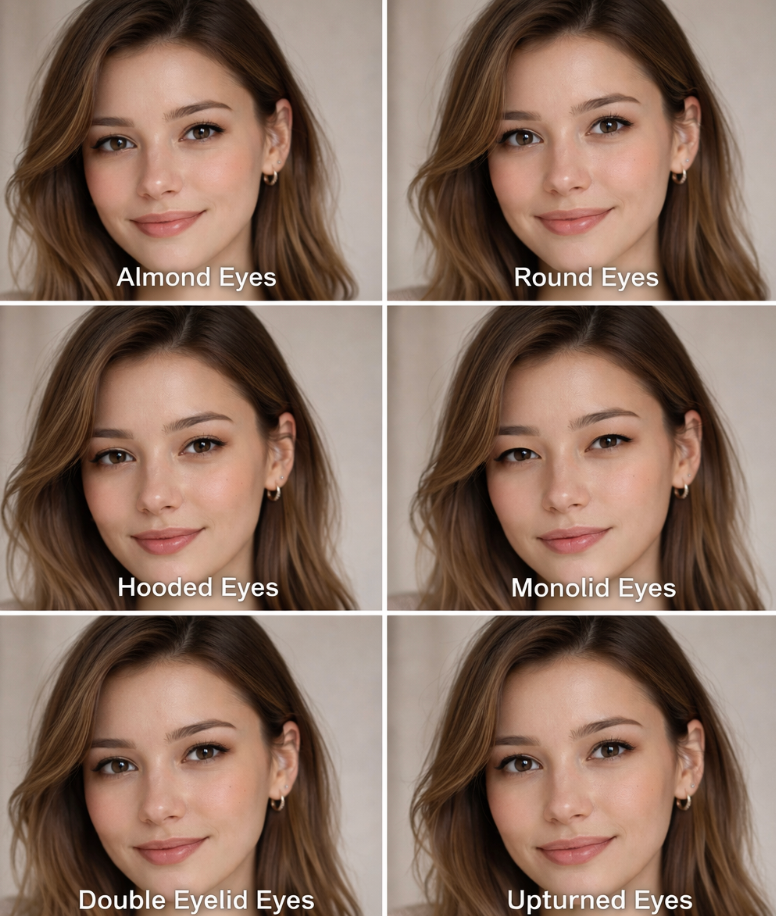
Before learning how to identify your own eye shape, it helps to know what's out there. There are 7 main eye shape types, and most people fall into one — or somewhere in between.
| Eye Shape | Key Feature |
|---|---|
| Almond | Tapered ends, visible iris on all sides |
| Round | Wide-open, full circle of iris visible |
| Monolid | Little to no crease on the eyelid |
| Hooded | Skin folds down over the crease |
| Upturned | Outer corners lift upward |
| Downturned | Outer corners angle downward |
| Wide-set / Close-set | Defined by distance between the eyes |
💡 Tip: Most eye shape charts focus on the lid shape and the position of the outer corner — these two features tell you almost everything.
How to Tell What Eye Shape You Have
There are two ways to figure out your eye shape: the classic mirror method, or the fast AI method (more on that below).
Method 1: The Mirror Test (3 Steps)
Step 1 — Look straight into a mirror in natural light.
Pull your hair back so your eyes are fully visible. Relax your face — don't raise your brows.
Step 2 — Check your eyelid crease.
- Can you see a visible crease above your lash line? → You likely have a double lid (almond, round, upturned, or downturned).
- Is the crease hidden or absent? → You likely have a monolid or hooded eye shape.
Step 3 — Look at your outer corners.
- Do the outer corners lift slightly upward? → Upturned
- Do they angle slightly downward? → Downturned
- Do they sit on a flat, even line? → Almond or Round
Still not sure? That's completely normal — many people sit between two eye shapes. That's exactly where an AI eye shape test helps.
Method 2: Try the AI Eye Shape Detector (Fastest & Most Accurate)
If the mirror method leaves you uncertain, skip the guesswork entirely. BananaPro's AI Eye Shape Detector is a purpose-built AI workflow that does two things at once: it reads your current eye shape from a photo, and then uses Image-to-Image AI generation to show you what your eyes would look like reshaped — rendered realistically on your own face.
Here's how it works:
- Open the Eye Shape Detector workflow — no account required to start
- Upload a clear, front-facing photo — natural light, eyes fully open works best
- Describe the eye shape you want — e.g., "almond-shaped eyes" or "larger, more open round eyes"
- Click Generate — the AI edits your photo and produces a high-resolution result you can download
👉 Try the Free AI Eye Shape Detector
This is different from a quiz or a filter overlay. BananaPro uses a full Image-to-Image generation pipeline, so the result is a realistic, photographic-quality preview — not a cartoon effect. You can see exactly how a different eye shape would look on your face before committing to a makeup technique, lash style, or any procedure.
Eye Shape Guide: Every Type Explained
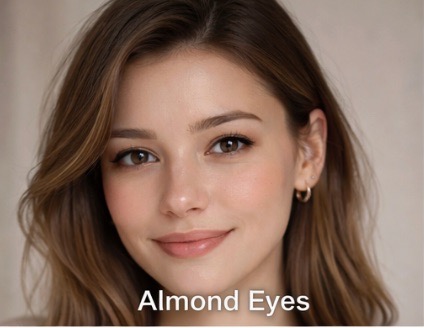
1. Almond Eye Shape
What it looks like: The outer corners taper to a point, and you can see white space (sclera) above and below the iris. This is often considered the "most versatile" eye shape.
Famous examples: Beyoncé, Megan Fox
Best for:
- Almost any eye makeup look
- Cat-eye liner works especially well
- Most eyeglass frames are flattering
2. Round Eye Shape
What it looks like: The eyes appear wide and open, with a visible circle of iris. The inner and outer corners are softly curved rather than pointed.
Famous examples: Zooey Deschanel, Katy Perry
Best for:
- Elongating liner along the outer lash line to add length
- Avoid over-lining the waterline, which can make eyes look smaller
- Rimless or oval frames complement the shape
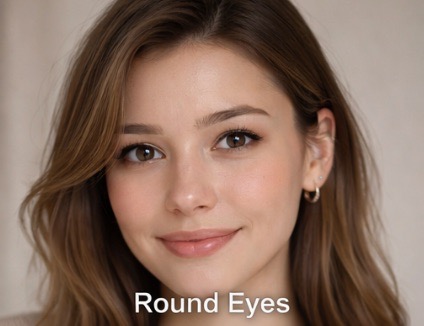
3. Monolid Eye Shape
What it looks like: Little to no visible crease on the upper eyelid. The lid appears smooth and flat, which is common among people of East Asian descent.
Famous examples: Lucy Liu, Lisa (BLACKPINK)
Best for:
- Bold graphic liner looks stunning on this shape
- Shimmer on the center of the lid adds dimension
- Avoid thick, heavy crease blending which won't show up
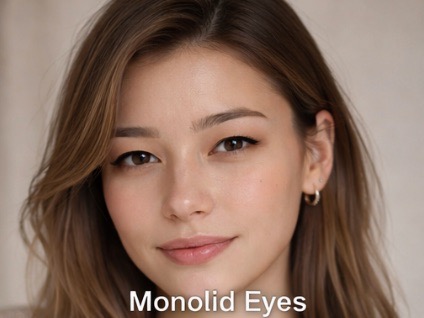
4. Hooded Eye Shape
What it looks like: The brow bone is prominent and the skin folds down over the crease, making the lid appear smaller or even hidden when the eyes are open.
Famous examples: Blake Lively, Jennifer Lawrence
Best for:
- Apply eyeshadow slightly above the natural crease so it's visible when eyes are open
- Tightline the upper waterline instead of thick liner on the lid
- Cut-crease looks are very flattering
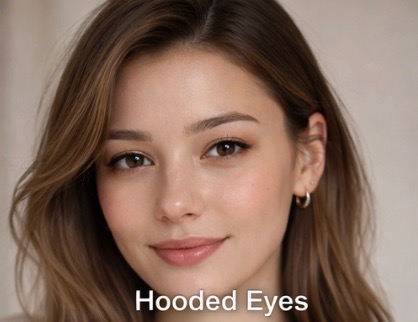
5. Upturned Eye Shape
What it looks like: The outer corner of the eye is slightly higher than the inner corner, creating a natural "cat-eye" lift.
Famous examples: Kendall Jenner, Marilyn Monroe
Best for:
- Smudging liner along the lower lash line balances the lift
- Avoid overly dramatic cat-eyes that over-exaggerate the angle
- Angular frames (like cat-eye glasses) complement perfectly
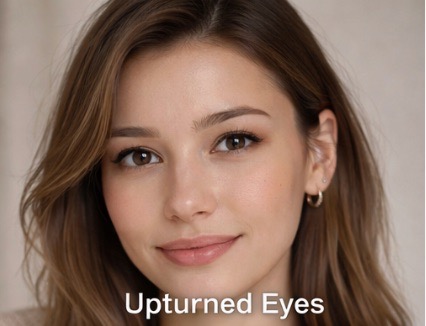
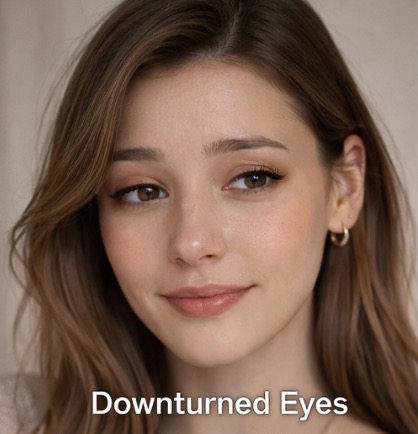
6. Downturned Eye Shape
What it looks like: The opposite of upturned — the outer corners angle slightly downward, giving eyes a gentle, soft appearance.
Famous examples: Anne Hathaway, Camilla Belle
Best for:
- Winged liner flicked upward at the outer corner lifts the look
- Avoid dark shadow on the outer lower corner, which drags the eye down further
- Upswept or cat-eye frames are very flattering
7. Wide-set vs. Close-set Eyes
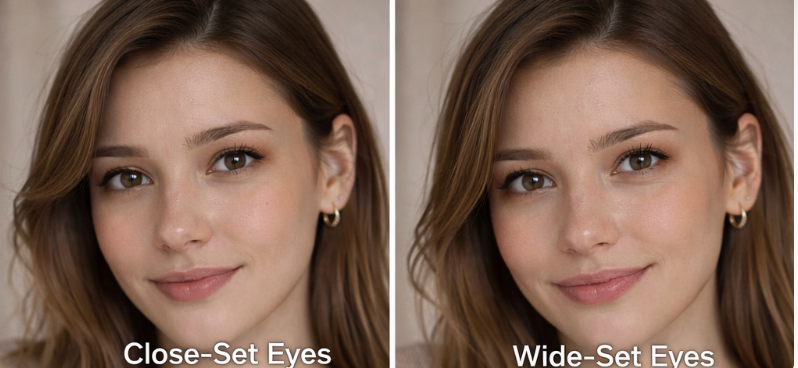
These describe the distance between your eyes rather than the lid shape itself — and it affects which makeup and glasses techniques work best.
- Wide-set: More than one eye-width of space between your eyes → focus definition on the inner corners
- Close-set: Less than one eye-width between your eyes → focus definition on the outer corners to create visual width
Try the BananaPro AI Eye Shape Detector
Most eye shape guides stop at identification. BananaPro's Eye Shape Detector goes further — it's a full AI image generation workflow that transforms your photo to show what a different eye shape would realistically look like on you.
Once you upload your photo, you can:
- Identify your current eye shape — the AI reads lid crease, corner angle, and iris proportions
- Generate a reshaped version of your photo — powered by Image-to-Image AI generation, not a simple filter
- Try multiple eye shapes — almond, round, upturned, fox eye, and more
- Use it for makeup and beauty planning — preview a look before investing time or money in it
- Download your result — high-resolution output with full usage rights included
No app download. No complicated setup. The entire workflow runs in your browser on BananaPro's Canvas platform.
👉 Open the AI Eye Shape Detector
FAQ: Eye Shape Questions Answered
Q: What is the rarest eye shape?
Upturned eyes with a visible double lid are considered relatively rare. True monolids are also less common outside of East Asian populations.
Q: Can your eye shape change over time?
Somewhat. As skin loses elasticity with age, hooded eyes can become more pronounced and the outer corners may naturally lower slightly. The fundamental bone structure remains the same.
Q: What eye shape is considered most attractive?
Almond eyes are widely cited in aesthetic research as the most universally balanced eye shape, but attractiveness is highly subjective and cultural. Every eye shape has distinct beauty.
Q: How accurate is an AI eye shape test?
A well-trained AI model analyzes multiple facial landmarks — lid fold, corner angle, iris visibility — making it significantly more precise than self-assessment in a mirror. The BananaPro tool is specifically trained on facial feature analysis.
Q: What eye shape should I have for fox eye makeup?
The fox eye trend works by elongating the outer corner upward to mimic an upturned, almond shape. It looks most dramatic on round or downturned eyes where the contrast is greatest.
Q: Why do I look different in photos vs the mirror?
Photos capture your face from one angle without the subtle adjustments your brain makes in real time. This is why an AI analysis from a photo can actually be more objective than a mirror check.
Q: What Eye Shape Is Most Common?
Almond-shaped eyes are the most common eye shape worldwide. The tapered outer corner and balanced lid proportions are considered the baseline from which most other variations are described.
Q:Why Is My Eye Shape Oval?
"Oval" is sometimes used informally to describe an almond-shaped eye, since the overall outline of the eye resembles an oval. Technically, eye shapes are categorized by lid crease type and corner angle rather than the overall silhouette — but if your eyes look gently oval with soft, tapered corners and no extreme lift or drop, you most likely have almond-shaped eyes, which is the most common eye shape globally.
Conclusion
Finding out your eye shape does not have to be confusing. Once you understand the key signs — eyelid crease, outer corner angle, and spacing — it becomes much easier to identify whether your eyes are almond, round, monolid, hooded, upturned, downturned, wide-set, or close-set.
Whether you want to choose better makeup, test a new lash style, or simply understand your features more clearly, knowing your eye shape is a great place to start. For a fast and realistic preview, try the BananaPro AI Eye Shape Detector and see your possibilities in seconds.