GPT Image 2 Review: See How It Changes AI Image Generation
OpenAI's next image generation model has been spotted hiding in plain sight — and the early signals suggest it could be the biggest leap in AI image generation yet. This guide covers everything currently known about GPT Image 2: its leaked capabilities, expected upgrades, release timeline, and who stands to gain the most.
What Is GPT Image 2?
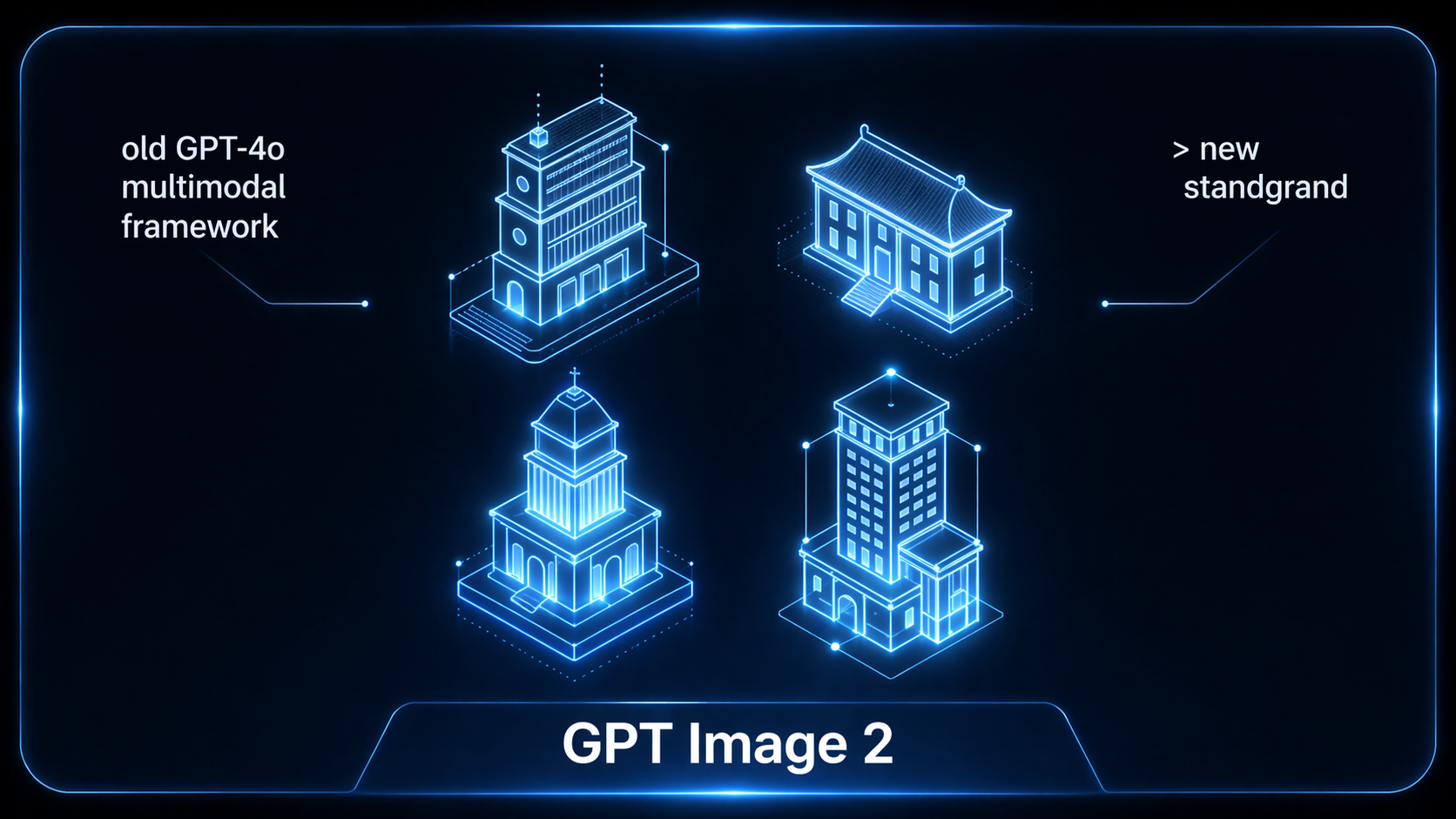
GPT Image 2 is OpenAI's new generation image generation model, following GPT Image 1 and GPT Image 1.5. It is built on an entirely new, standalone architecture — a fundamental departure from the GPT-4o multimodal framework that powered its predecessors.
Unlike GPT Image 1 and 1.5, GPT Image 2 is a dedicated image generation system designed from the ground up, rather than an extension of a language model. This architectural shift delivers meaningful improvements in resolution, multilingual support, and character consistency, establishing a new benchmark for OpenAI's image generation capabilities.
A Brief History of the GPT Image Series
The End of DALL·E
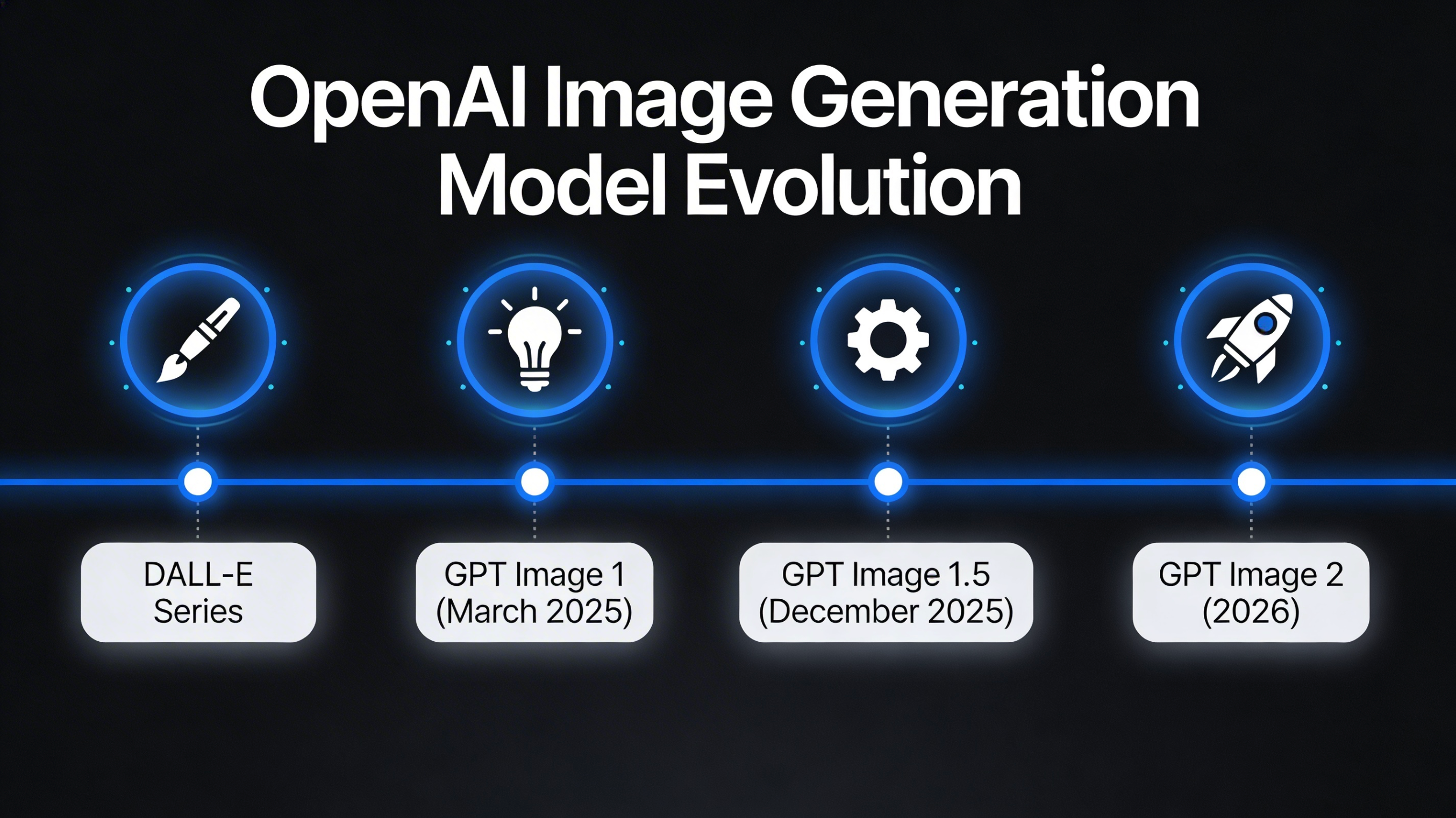
OpenAI's image generation roots trace back to the DALL·E series, which used diffusion model architecture. Groundbreaking at the time, DALL·E consistently struggled with accurate text rendering, precise prompt adherence, and photorealistic output at a professional level. DALL·E 2 and DALL·E 3 were officially retired on May 12, 2026.
GPT Image 1 — March 2025: Viral Sensation
In March 2025, OpenAI launched GPT Image 1, replacing DALL·E inside ChatGPT. The shift from diffusion to autoregressive modeling unlocked a new tier of capability: reliable in-image text rendering, image-to-image transformation, conversational iteration, and significantly improved realism.
The launch went viral almost immediately. Over 130 million users generated more than 700 million images in the first week alone. Studio Ghibli-style recreations dominated social media. Sam Altman changed his X profile picture to a Ghibli-inspired portrait and joked that the GPUs were "melting."
GPT Image 1.5 — December 2025: Professional-Grade Speed
GPT Image 1.5 launched in December 2025, shifting focus from novelty to utility: stronger instruction following, consistent facial likeness across edits, generation speeds up to 4× faster, and API costs 20% lower than GPT Image 1. It topped the LM Arena leaderboard with an ELO score of 1264, leading second place by nearly 30 points.
GPT Image 2 Core Features
1. Brand-New Standalone Architecture
The most consequential change is structural. Where GPT Image 1 and 1.5 were built on top of GPT-4o's multimodal framework, GPT Image 2 is a dedicated system built from scratch for image generation.
A purpose-built architecture delivers more targeted optimization for image-specific tasks, higher resolution ceilings, and lower inference costs. The new architecture combines autoregressive generation with diffusion refinement, taking the strengths of both approaches.
2. Native 4K Output
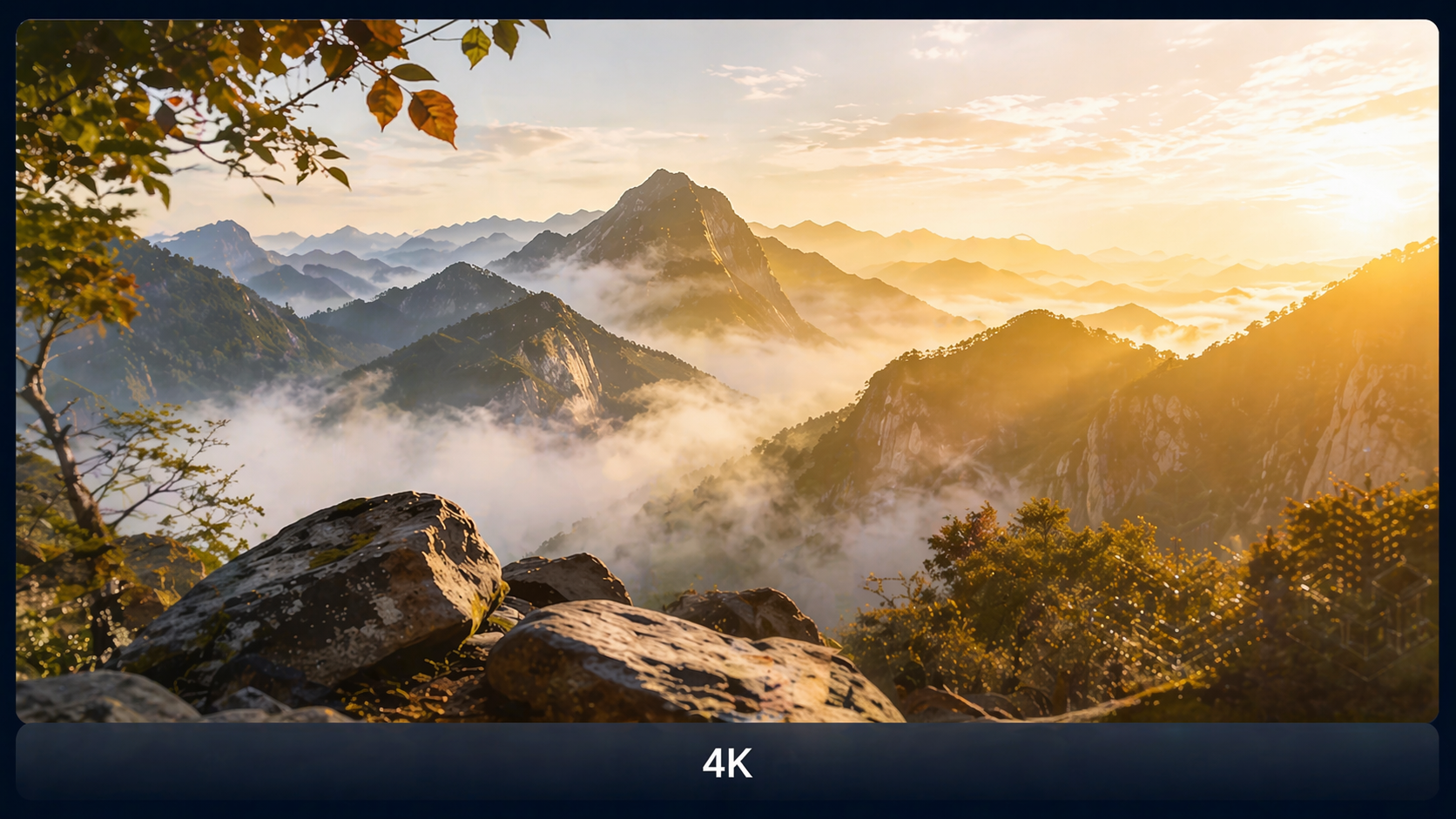
GPT Image 1.5 maxed out at 1536×1024 pixels. GPT Image 2 supports native resolutions of 2048×2048 and 4096×4096, along with 16:9 widescreen output.
This eliminates the lossy external upscaling step that professional workflows previously required. Advertising, product design, large-format printing, and editorial publishing no longer need post-generation resolution compensation.
3. Multilingual Text Rendering
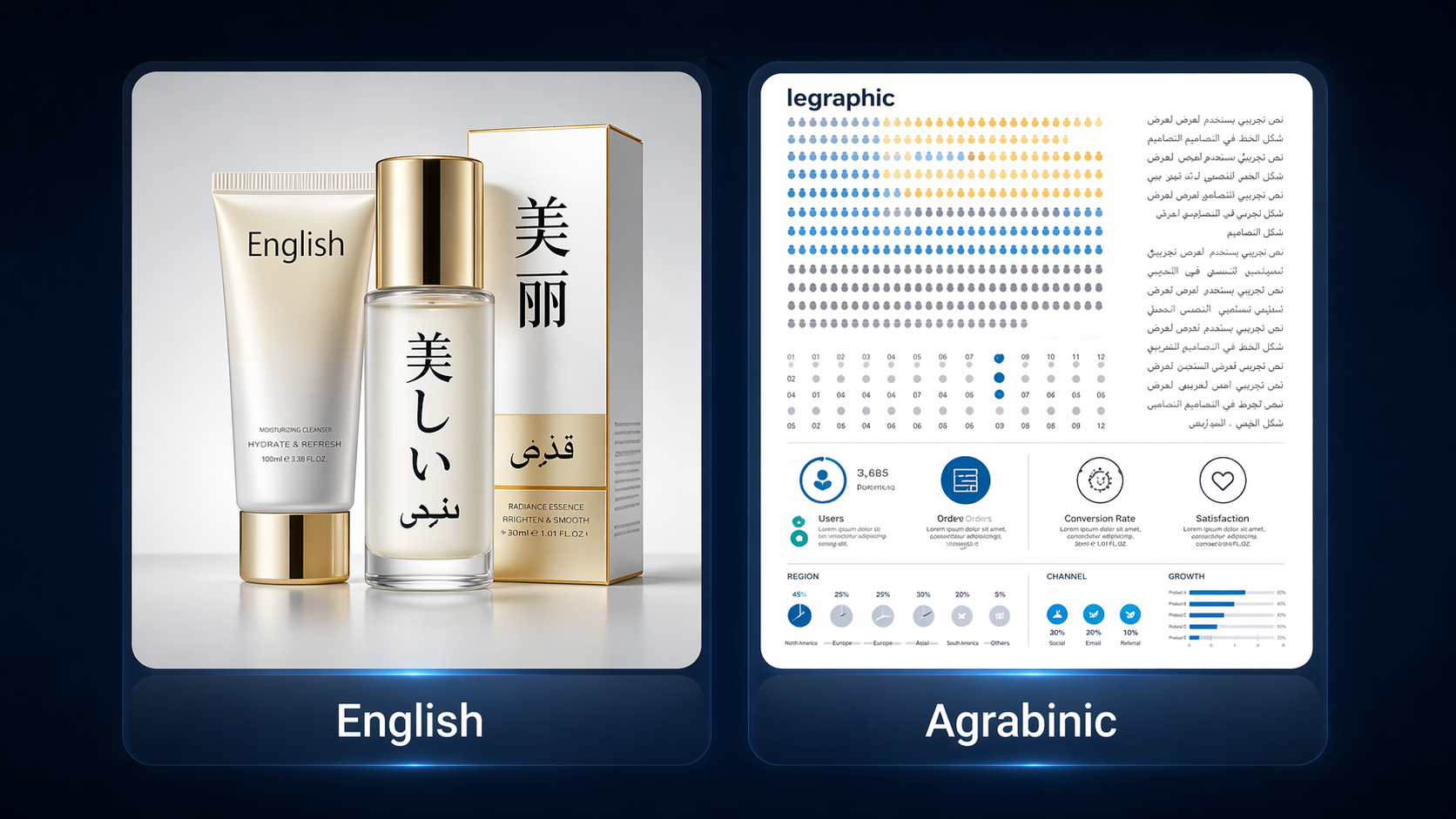
A persistent limitation of the GPT Image series was unreliable rendering of non-Latin scripts. Chinese, Japanese, Korean, Arabic, and Devanagari characters frequently appeared inaccurate or illegible.
GPT Image 2 brings CJK (Chinese-Japanese-Korean) and Arabic script rendering to the same level of accuracy currently available for English and other Latin-alphabet languages. For content creators, marketers, and developers serving Asian or Middle Eastern markets, this is the single most impactful upgrade in the entire feature set.
4. Advanced Typography and Dense Text Layouts
GPT Image 2 handles denser text layouts and longer passages with far fewer rendering errors. Infographics, product packaging, editorial layouts, and branded content — scenarios where text precision within an image is non-negotiable — can now use AI-generated output directly, with minimal manual correction.
5. Cross-Image Character Consistency
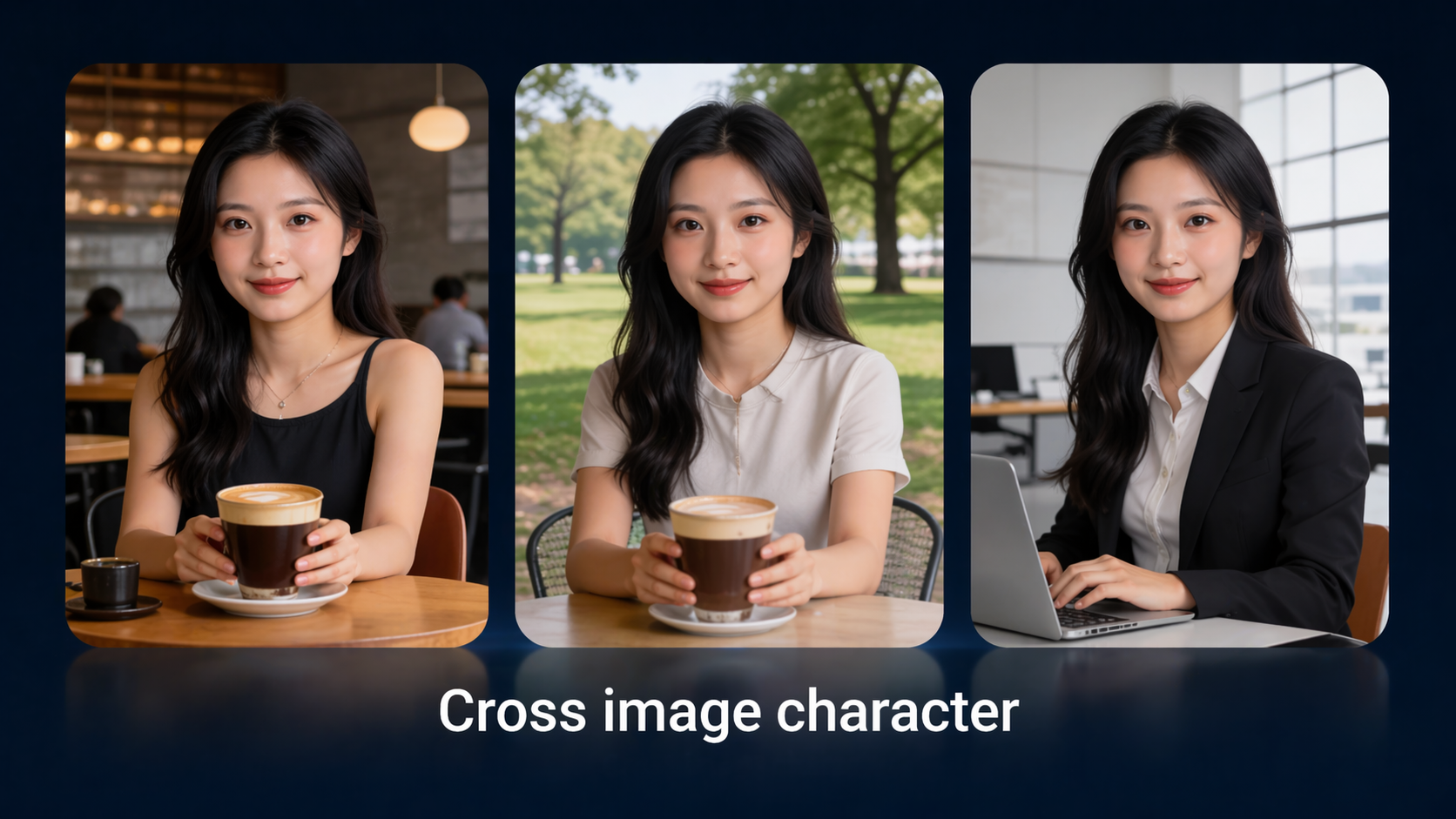
GPT Image 1.5 could maintain facial likeness within a sequence of edits on a single image. Generating multiple independent images of the same character without a reference image still produced drift and inconsistency.
GPT Image 2 introduces a persistent identity mechanism that maintains consistent characters, objects, and scenes across multiple images generated from scratch. This enables comic strips, storyboards, brand mascots, and large-scale product visualizations with consistent visual identity throughout.
How to Get Started
General users: Access GPT Image 2 directly through ChatGPT — no additional setup required. Describe the image you want in conversation, or upload a reference image for editing.
Developers: Call the gpt-image-2 model via the OpenAI API. If you were previously using DALL·E 2 or DALL·E 3, note that both have been retired as of May 12, 2026. Migration to the GPT Image series is straightforward — the API structure is fully backward compatible and requires only a model name update.
Content creators: Platforms like Banana Pro AI allow you to compare GPT Image 2 side-by-side with Midjourney, Grok Image, Seedream, and other leading models in a single interface — useful for finding the best fit for your specific workflow.
How It Compares to the Competition
| Model | Developer | LM Arena ELO | Core Strengths |
|---|---|---|---|
| GPT Image 2 | OpenAI | Latest Release | 4K output, multilingual, character consistency, world knowledge |
| GPT Image 1.5 | OpenAI | 1264 🥇 | Text rendering, prompt following, cost efficiency |
| Gemini 3 Pro Image | 1235 | Multimodal integration, cinematic realism | |
| Flux 2 Max | Black Forest Labs | 1168 | Photorealistic detail, price-performance ratio |
| Flux 2 Flex | Black Forest Labs | 1157 | High concurrency, flexible customization |
| Gemini 2.5 Flash Image | 1155 | Speed, versatility | |
| Hunyuan Image 3.0 | Tencent | 1152 | Chinese language optimization, Asian face realism |
| Microsoft MAI-Image-2 | Microsoft | Not independently ranked | Text rendering +115 pts improvement |
The GPT Image series holds a distinctive set of advantages that competitors have not fully replicated: text rendering accuracy, world knowledge integration (the model knows what specific brands and real-world objects look like), native image editing, and deep integration with the ChatGPT ecosystem. GPT Image 2 preserves all of these strengths while closing the gaps in resolution, multilingual support, and character consistency.
Notably, Microsoft MAI-Image-2 achieved a +115-point improvement in text rendering subcategories in the March 2026 Arena update, signaling that competition in this space has intensified across the board.
Who Benefits Most?
Designers and Creative Professionals
Native 4K output eliminates the upscaling step from professional production workflows. Advanced typography handling makes AI-generated images viable for print and commercial design without manual correction — for the first time.
Marketing Teams and Brand Managers
Cross-image character consistency means brand mascots, campaign visuals, and product scenarios can be generated at scale without a photographer or illustrator for every variation. GPT Image 2 is a genuine production tool, not just a concept mockup generator.
API Developers
GPT Image 2 is backward compatible with previous API versions. Upgrading from GPT Image 1.5 requires only a model name change. Note that DALL·E 2 and DALL·E 3 were officially retired on May 12, 2026 — any remaining integrations with those models must be migrated immediately.
Content Creators in Non-English Markets
The CJK and Arabic text rendering improvements represent the most directly impactful upgrade for creators producing content in Asian or Middle Eastern languages. Reliably generating AI images with legible Chinese, Japanese, Korean, or Arabic text is a capability that did not exist before GPT Image 2.
Frequently Asked Questions
Is GPT Image 2 free to use?
GPT Image 2 is available to ChatGPT subscribers. API usage is billed per generated image based on quantity and resolution. See OpenAI's official pricing page for current rates.
Is GPT Image 2 better than GPT Image 1.5?
Yes, across resolution, multilingual text rendering, and cross-image character consistency. For users with professional requirements, GPT Image 2 is the recommended choice. GPT Image 1.5 remains available as a cost-efficient tier.
Which languages does GPT Image 2 support for text rendering?
GPT Image 2 supports multilingual text rendering including Chinese, Japanese, Korean, and Arabic, at accuracy levels comparable to English and other Latin-alphabet languages.
Can GPT Image 2 be used for commercial purposes?
Yes. Under OpenAI's usage policies, images generated via API can be used commercially. Refer to OpenAI's official terms of service for full details.
DALL·E has been retired — what should I do?
DALL·E 2 and DALL·E 3 were officially retired on May 12, 2026. Migrating to GPT Image 2 requires only updating the model name in your API calls. No other structural changes are needed.
Final Thoughts
Competition in AI image generation has never been more intense. New models redefine what is possible every few months. But GPT Image 2 means more than better benchmarks and higher resolution — it represents OpenAI's rethought answer to what image generation should fundamentally do.
From DALL·E's rough early outputs, to the global viral moment of GPT Image 1, to GPT Image 2 genuinely entering professional workflows today, the trajectory points consistently in one direction: AI-generated images are moving from "looks pretty good" to "ready to ship."
Whether you are a first-time user exploring AI image generation or a developer integrating it into a production product, GPT Image 2 is the right place to start. The tools are ready. What comes next is up to you.